
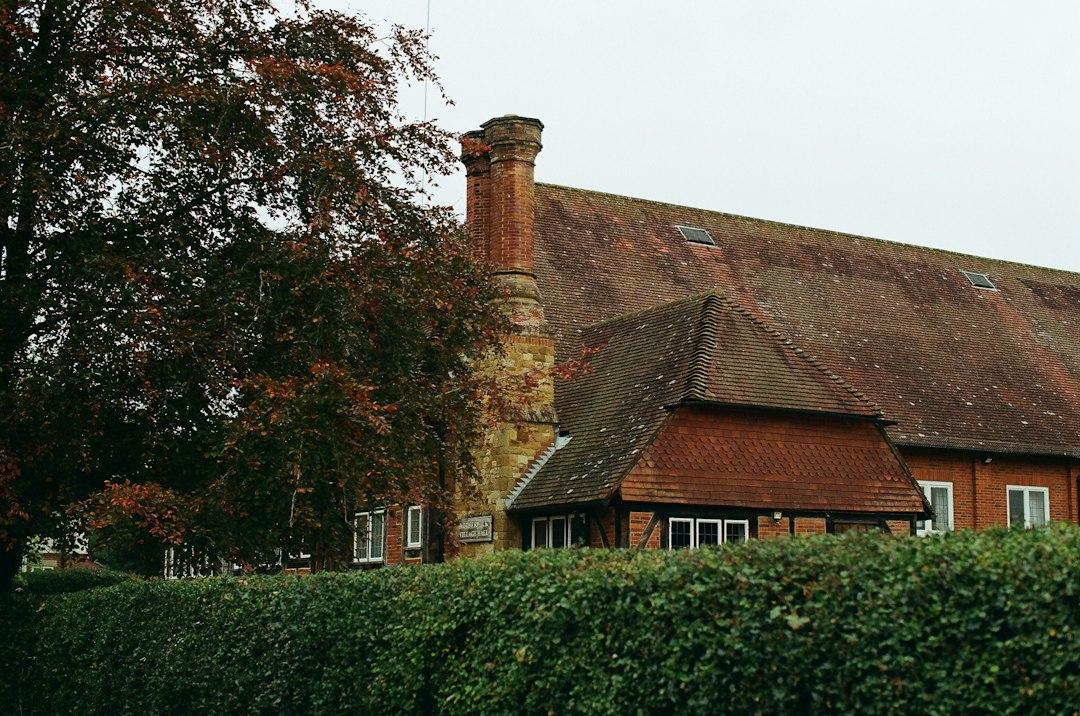
Old clay, old iron, old brick: a chimney check sized for the house you are selling or buying
Book a sale inspection
Give us the address and the year the house was built, if you know it, and say if you are buying or selling.
Three parts that age in an older chimney
Start at the bottom. A cast iron damper from the 1950s or 1960s sits on a ledge just above the firebox. After decades of heat and damp, its plate rusts, warps or seizes half open, and the ledge behind it, the smoke shelf, becomes a catch basin for soot, twigs, feathers and whatever a starling dropped on its way in. Above that runs the flue: square or round clay tiles stacked on top of each other with mortar between them. Those joints are where an older flue gives up first, either from a hot fire, years of acidic condensation, or the ground shaking. At the top sits the brick itself and the cement wash across it, which weathers, cracks and lets water into the core of the stack.
None of this shows up in a listing photo, and very little of it shows from the hearth. A seller may have used the fireplace twice in ten years. A buyer has no way to know if a raccoon spent last spring on the smoke shelf. Our Level 2 visit answers both, with pictures.
Why the camera matters more on an old flue
Clay tile is fine when it is whole. The trouble is that a cracked tile or a missing joint looks like nothing from below, and it can let heat reach the joists and studs packed close to the brick. Houses this age rode out Whittier Narrows in 1987 and then the 1994 quake, and a tile nudged out of line by either one sits there silently. So on an older flue we film every foot, not a sample.
Animals add their own layer. A flue that held a nest needs clearing before the camera can see the tile behind it. We pull the loose material off the shelf, film, and note in the report whether the flue needs a full sweep and whether the top is open to the next tenant with feathers.
- Damper: does it open, close and seal, or has rust frozen it
- Smoke shelf: debris, droppings or old nest material
- Clay tile: cracks, gaps, offsets and missing mortar, joint by joint
- Top of the stack: wash, brick, cap or the lack of one, and flashing
What the buyer and the seller each get out of it
For a seller, the report turns an unknown into a line item. You can fix what we found, price it into the asking figure, or hand the report over with the disclosures. For a buyer, it gives a request for repairs something firm to rest on: photos of a cracked tile carry more weight than a guess.
Either way the findings are written plainly: where each problem sits, how serious it is, and what the repair would be. Where the repair is one we have a published price for, such as leak repair, the price is in the report. A cap is quoted after we measure. Where it is not, we say so and offer a written quote.
Sale inspection prices
These are the two visit types we run for a sale. Most older houses get the camera visit.
- Camera visit, top to bottom, with written report
- $405
- Walk-around look, no camera
- $170
Any repair the report calls for gets its own written price before work starts.
Questions from people selling or buying an older house
Is the walk-around look enough for a 1960s house in a sale?
Usually not. It tells you what we can see from the hearth and the roof. On an old clay flue the problems sit in the joints between tiles, and only the camera reaches them. The standard most chimney work follows, NFPA 211, also treats a change of ownership as a reason for the camera visit.
We found feathers in the firebox. Does that change the visit?
It means something has probably used the flue. We clear what we can reach before filming and tell you in the report whether the flue needs a full sweep and a cap. A sweep starts from $435. A cap gets its price after we measure, based on its size, its metal and the chimney it sits on.
Who sees the report?
Whoever you list when you book. Buyers often want their agent copied; sellers often want it for the disclosure packet. We send the same report to each name.
Do we need to be home?
Someone needs to open the door and let us reach the fireplace and the roof. On a listed house that is often an agent.
Does the report say whether the chimney meets code?
It says what we saw against the current standard and what we would repair. Whether a city permit applies to a repair is covered on our up to code page.
An older chimney, a clear report
Name the address on the contact page and say whether you are buying or selling; we will book the camera inspection.
Call (657) 222-0397